
Introduction to the Red Sea
The Red Sea is one of the most famous and historically important seas in the world. Located between northeastern Africa and the Arabian Peninsula, the Red Sea has connected civilizations, trade routes, cultures, and travelers for thousands of years. Today, it is known not only for its rich history but also for its crystal-clear waters, colorful coral reefs, marine life, and world-class tourism destinations.
For centuries, the Red Sea played a major role in trade and transportation between ancient Egypt, Africa, Arabia, and Asia. Ancient sailors crossed its waters to transport gold, spices, incense, and precious goods. Over time, the region became an important center for commerce, exploration, and cultural exchange.
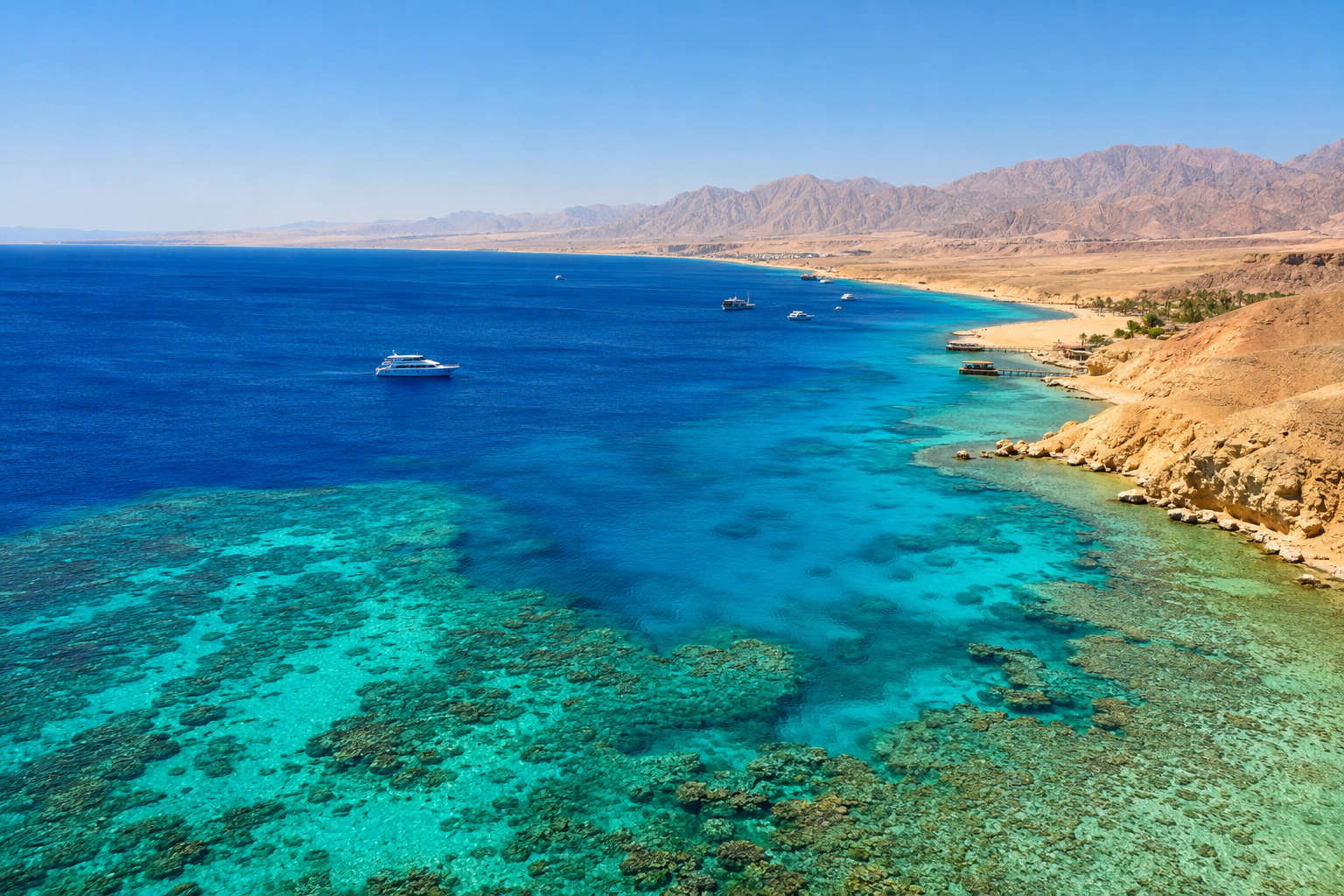
Today, the Red Sea is one of Egypt’s top tourist destinations. Millions of visitors travel every year to enjoy snorkeling, scuba diving, desert adventures, boat trips, and luxury resorts along the coast. Famous destinations such as Sharm El Sheikh, Hurghada, Marsa Alam, and Dahab have become internationally recognized for their beauty and underwater ecosystems.
The Red Sea is also home to some of the most unique coral reefs and marine species on Earth. Its warm waters and excellent visibility make it one of the best diving locations in the world. Beyond tourism, the sea continues to play an important role in global shipping and international trade through the Suez Canal, which connects the Red Sea to the Mediterranean Sea.
From ancient history to modern tourism, the Red Sea remains one of the most fascinating natural treasures in Egypt and the Middle East.
Why Is It Called the Red Sea?
The origin of the name “Red Sea” has fascinated historians and scientists for centuries. Although the sea is known today for its beautiful blue waters, there are several theories explaining why it became known as the Red Sea.
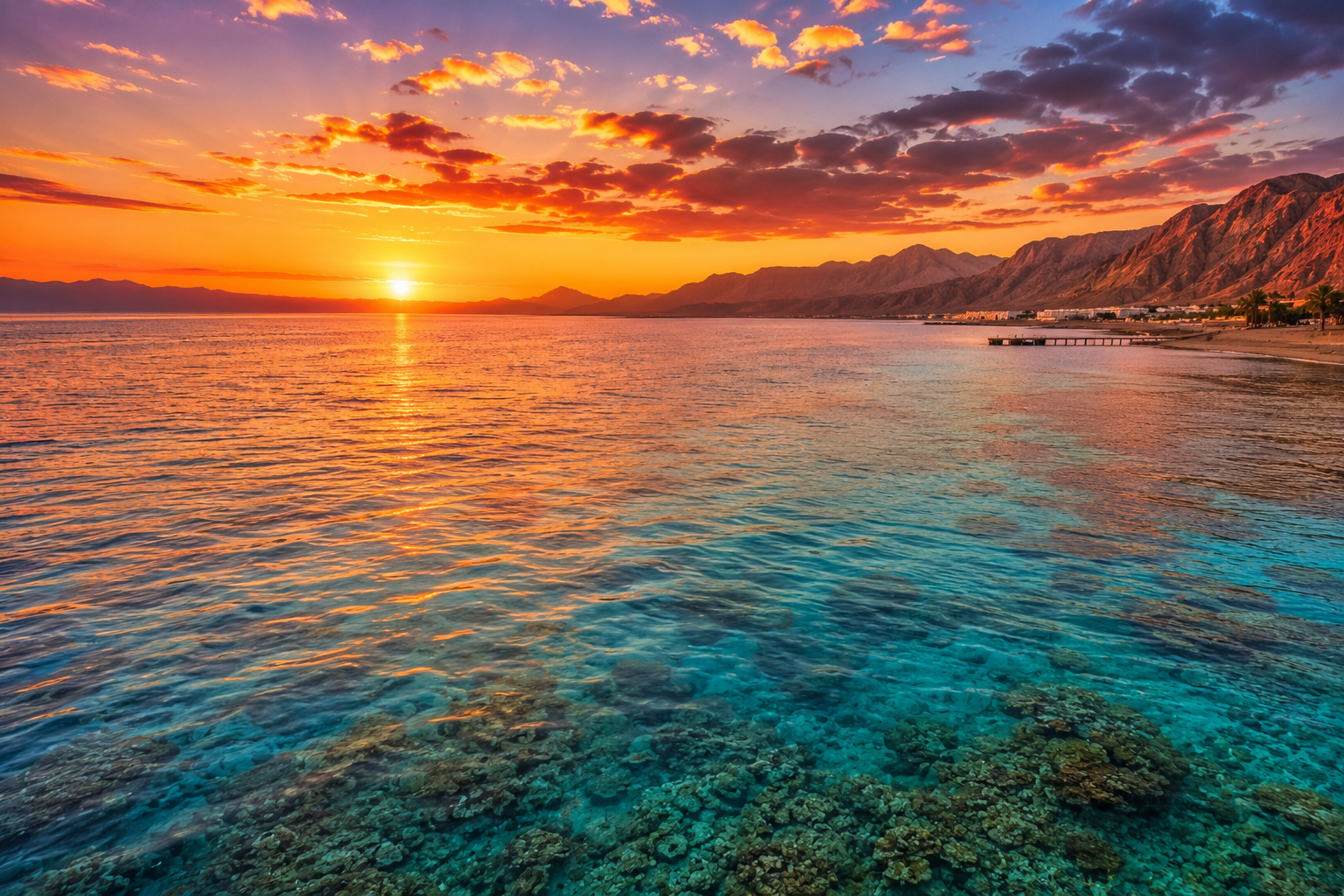
One of the most common explanations is related to seasonal blooms of a type of algae called Trichodesmium erythraeum. When these microorganisms appear in large numbers, they can create a reddish-brown color on the surface of the water, which may have inspired the name “Red Sea.”
Another theory connects the name to the surrounding desert mountains, especially during sunrise and sunset when the rocks and mountains reflect reddish colors onto the sea. Ancient travelers and sailors may have associated these dramatic colors with the region.
Some historians believe the name comes from ancient directional systems used in Asia and the Middle East. In some ancient cultures, colors represented directions:
- Black = North
- Red = South
Because the Red Sea lies south of several ancient civilizations, it may have been referred to as the “Red Sea” for geographical reasons.
The Red Sea has been mentioned throughout history by ancient Egyptians, Greek geographers, Roman writers, and later Islamic scholars. Over thousands of years, the name remained widely used in maps, trade records, and historical texts.
Today, the Red Sea is famous not because of its color, but because of its incredible marine life, coral reefs, clear waters, and historical importance connecting Africa and Asia.
Geography of the Red Sea
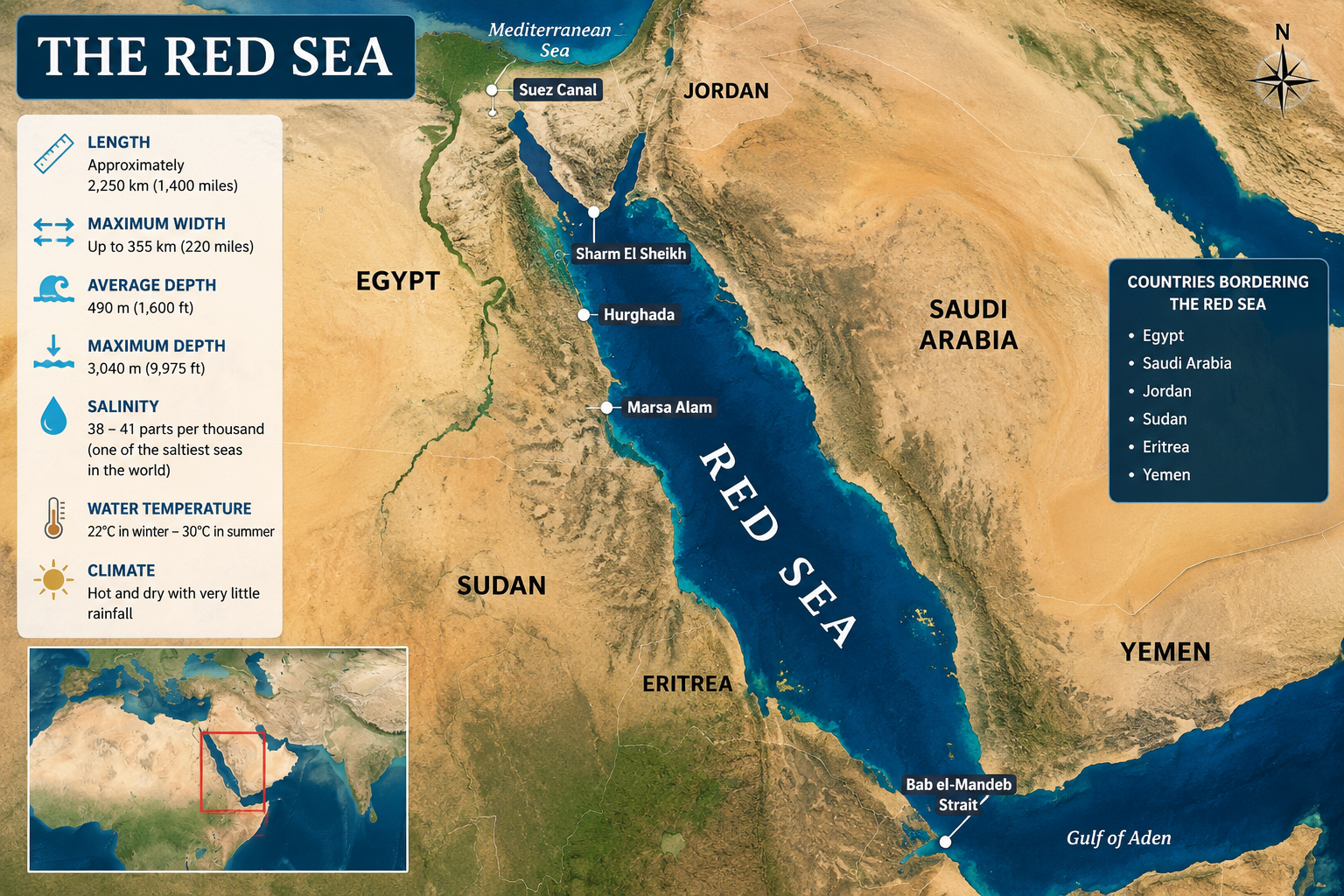
The Red Sea is a narrow body of water located between northeastern Africa and the Arabian Peninsula. It stretches from the Suez Canal in the north to the Gulf of Aden in the south, where it connects to the Arabian Sea and the Indian Ocean.
The Red Sea is approximately 2,250 kilometers (1,400 miles) long and reaches widths of up to 355 kilometers (220 miles). It is considered one of the saltiest seas in the world because of high temperatures, strong evaporation, and limited rainfall.
Several countries border the Red Sea, including:
- Egypt
- Saudi Arabia
- Jordan
- Sudan
- Eritrea
- Yemen
The sea is famous for its warm climate and crystal-clear waters throughout most of the year. Water temperatures remain comfortable even during winter, making the region ideal for tourism, swimming, snorkeling, and scuba diving.
One of the most remarkable features of the Red Sea is its underwater ecosystem. The sea contains thousands of marine species, including colorful fish, dolphins, sea turtles, and some of the world’s most beautiful coral reefs. Many of these species are unique to the Red Sea and cannot be found anywhere else.
The coastline of Egypt along the Red Sea is home to some of the country’s most famous tourist destinations, including Sharm El Sheikh, Hurghada, Marsa Alam, and Dahab. These destinations attract millions of visitors every year because of their beaches, coral reefs, luxury resorts, and water sports activities.
The Red Sea is also extremely important for global trade and transportation. Through the Suez Canal, ships traveling between Europe and Asia can pass through the Red Sea instead of sailing around Africa, making it one of the world’s most strategic waterways.
The Red Sea in Ancient Egypt
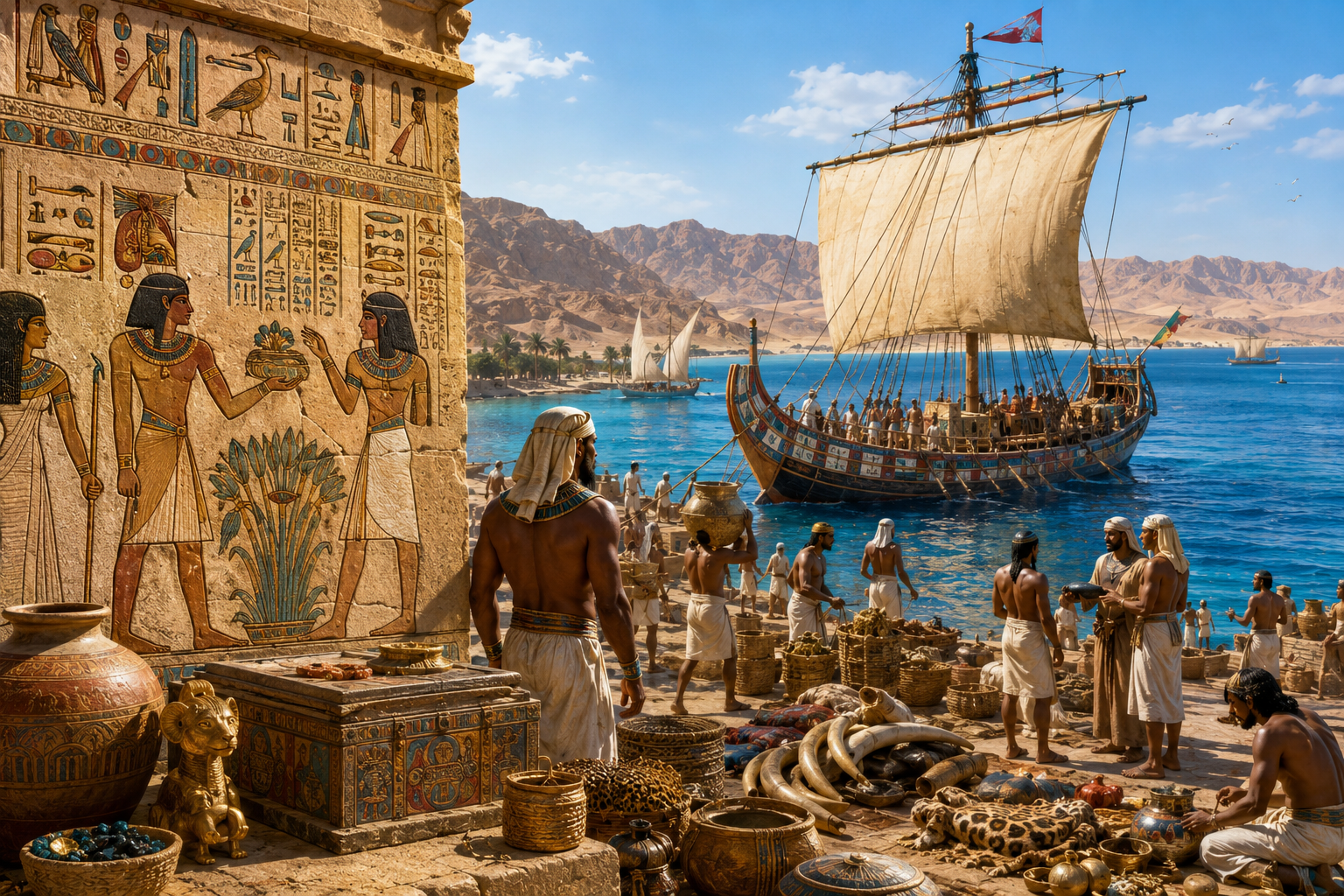
The Red Sea played an important role in the history of Egypt since ancient times. Thousands of years ago, the ancient Egyptians used the Red Sea for trade, exploration, transportation, and communication with distant civilizations. It became one of the most valuable waterways for the Egyptian kingdom and helped connect Egypt with Africa and Asia.
Ancient Egyptian pharaohs organized major expeditions across the Red Sea to reach the mysterious Land of Punt, which historians believe was located somewhere near the Horn of Africa. These expeditions brought valuable goods back to Egypt, including gold, incense, ivory, ebony, exotic animals, perfumes, and rare woods.
One of the most famous expeditions was led during the reign of Queen Hatshepsut in the 15th century BC. The walls of her temple at Deir el-Bahari contain detailed carvings showing ships sailing through the Red Sea and returning with treasures from Punt. These scenes are considered some of the oldest recorded maritime expeditions in history.
The ancient Egyptians also built ports along the Red Sea coast to support trade and naval activities. Archaeologists discovered remains of harbors, storage buildings, ropes, and ancient ship parts that prove Egypt had advanced maritime knowledge thousands of years ago.
Besides trade, the Red Sea was important for mining expeditions in the Eastern Desert, where Egyptians searched for gold and precious stones. The sea also helped strengthen Egypt’s economy by connecting the kingdom to international trade networks.
Over time, the Red Sea became a symbol of exploration, wealth, and connection between civilizations. Its importance continued through the Greek, Roman, and Islamic periods, making it one of the most historically significant waterways in the ancient world.
Ancient Trade Routes Across the Red Sea
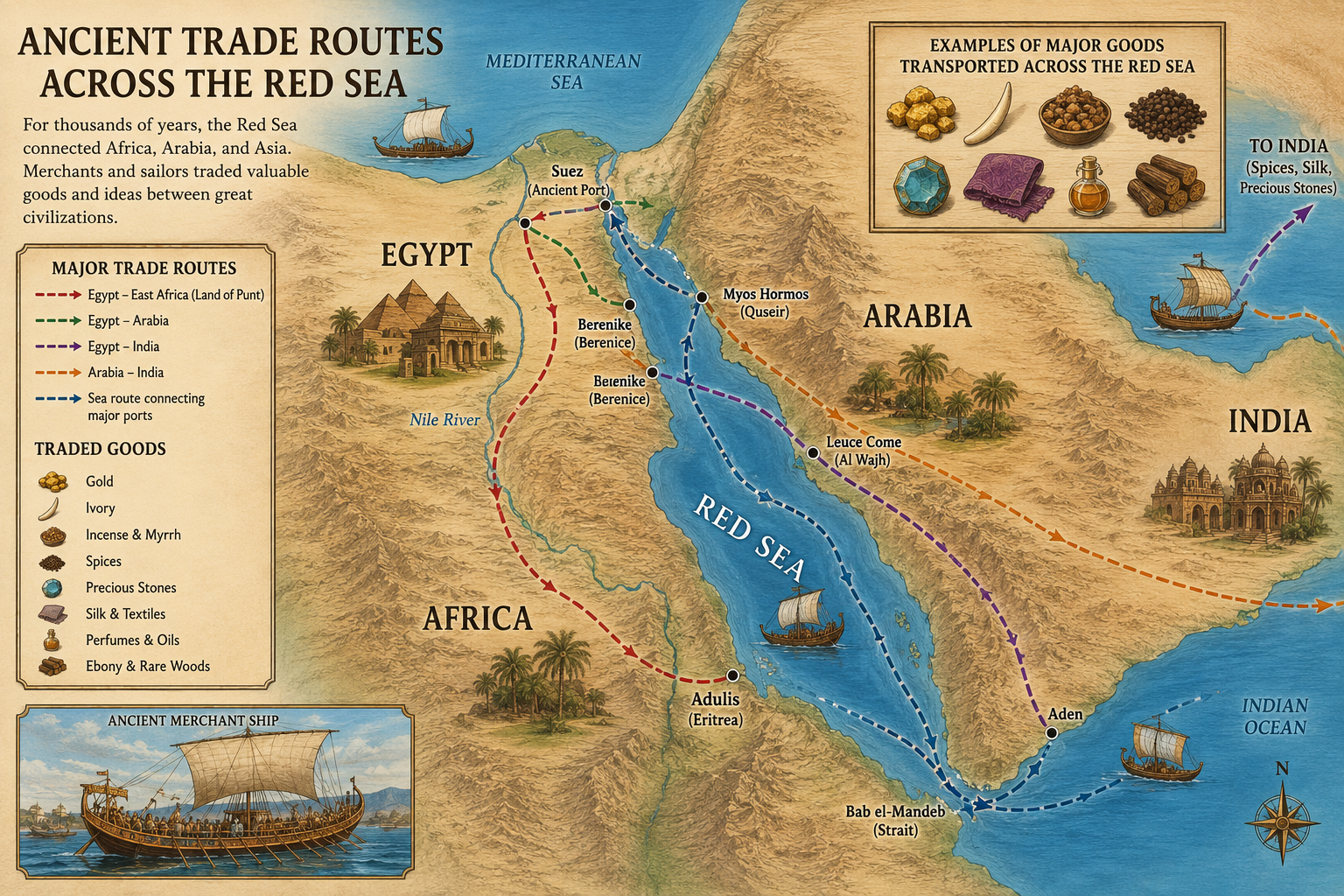
For thousands of years, the Red Sea served as one of the world’s most important trade routes. It connected ancient civilizations across Egypt, Africa, the Arabian Peninsula, and Asia, allowing merchants and sailors to transport valuable goods between continents.
Ancient Egyptians used the Red Sea to trade with regions along the East African coast and the Land of Punt. Ships carried products such as gold, ivory, incense, perfumes, animal skins, exotic animals, and rare woods back to Egypt. These goods were highly valuable and were often used in temples, royal palaces, and religious ceremonies.
Over time, the Red Sea became part of a larger international trading network linking:
- Egypt
- Arabia
- India
- East Africa
- The Mediterranean world
Merchants transported spices, silk, pearls, precious stones, and perfumes through Red Sea ports. The sea allowed goods from Asia and Africa to reach Egypt and later continue toward Europe.
During the Greek and Roman periods, trade across the Red Sea expanded significantly. Roman merchants sailed through Egyptian ports to reach India and bring back luxury products such as pepper, silk, and exotic spices. This trade helped increase the wealth and importance of Egyptian coastal cities.
The Red Sea trade routes also encouraged cultural exchange between civilizations. Languages, religions, technologies, and traditions spread through the movement of merchants and travelers across the region.
Several ancient ports along the Egyptian Red Sea coast became major centers of commerce and transportation. Archaeological discoveries show warehouses, ship remains, roads, and ports that prove the region’s importance in global trade history.
Even today, the Red Sea remains one of the world’s most strategic waterways. Modern shipping routes passing through the Suez Canal continue the legacy of trade and connection that began thousands of years ago.
The Red Sea in Greek and Roman Times
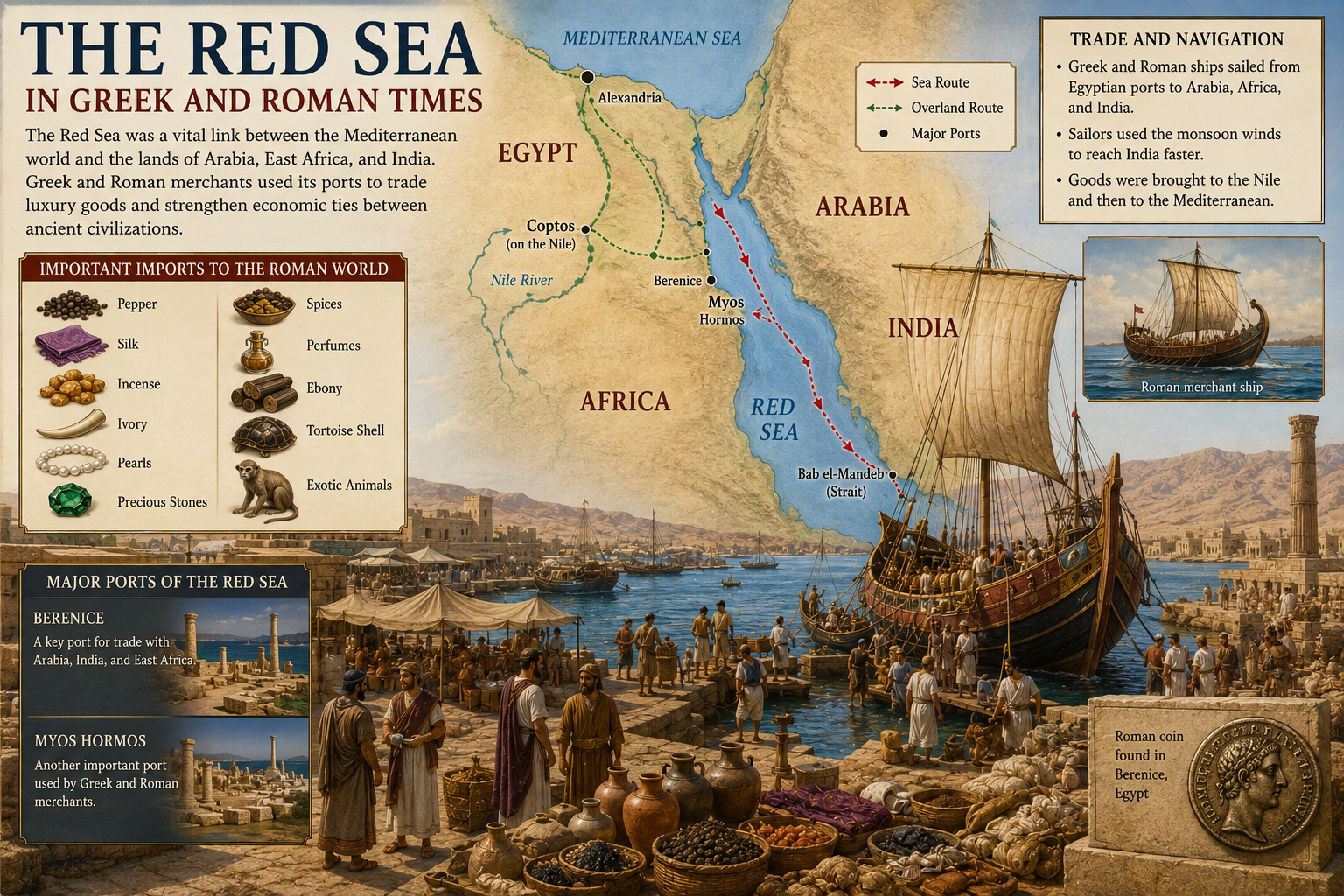
During the Greek and Roman periods, the Red Sea became one of the most important maritime trade routes in the ancient world. Its strategic location allowed merchants, explorers, and sailors to connect the Mediterranean region with Arabia, East Africa, and India.
After the conquest of Egypt by Alexander the Great, Greek influence expanded across the region. The Ptolemaic rulers of Egypt developed ports along the Red Sea coast and improved maritime trade networks. Ships sailed regularly between Egyptian ports and distant markets carrying luxury goods, spices, perfumes, precious stones, and exotic animals.
Later, under Roman rule, the Red Sea reached an even greater level of importance. The Romans depended heavily on trade with India and Arabia, and the Red Sea became the main gateway for these international commercial routes.
Important ports such as Berenice and Myos Hormos on the Egyptian coast became major centers for trade and transportation. Roman merchants used these ports to import:
- Pepper
- Silk
- Incense
- Ivory
- Pearls
- Precious stones
These valuable products were transported from the Red Sea to the Nile River and then shipped north toward the Mediterranean and Europe.
The Romans also improved navigation and maritime technology in the region. Sailors learned to use seasonal monsoon winds, which allowed faster travel between Egypt and India. This advancement greatly increased trade and strengthened economic connections between civilizations.
The Red Sea was not only a trade route during this period but also a center of cultural exchange. Ideas, languages, religions, and artistic influences moved across the sea together with merchants and travelers.
Ancient writings from Greek and Roman historians describe the Red Sea as a wealthy and highly active commercial region. Archaeological discoveries along the Egyptian coast continue to reveal ports, warehouses, ship remains, and artifacts that show the enormous importance of the Red Sea during classical antiquity.
The Red Sea and Islamic History
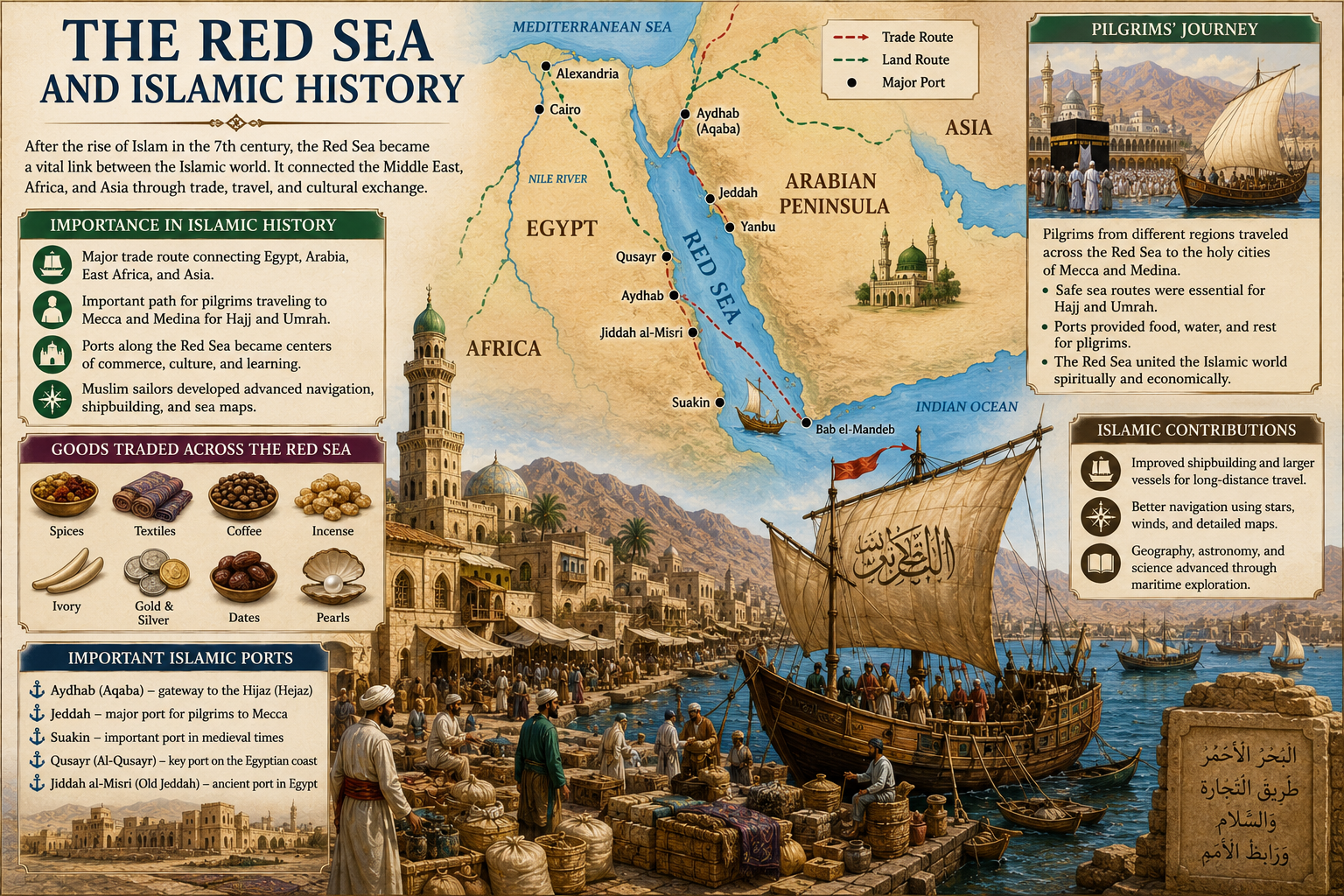
The Red Sea became even more important after the rise of Islam in the 7th century. Because of its location between Egypt and the Arabian Peninsula, the sea played a major role in trade, travel, cultural exchange, and religious journeys throughout the Islamic world.
Muslim merchants used the Red Sea as one of the main maritime routes connecting the Middle East, North Africa, East Africa, and Asia. Ships transported goods such as spices, textiles, coffee, incense, ivory, and precious metals between major Islamic trading cities.
The Red Sea was also extremely important for pilgrims traveling to the holy cities of Mecca and Medina. Pilgrims from Egypt, North Africa, and other regions crossed the sea on their journey to perform Hajj and Umrah. Ports along the Red Sea became major centers for travelers and merchants during this period.
Several important Islamic ports developed along the Egyptian coast, helping strengthen Egypt’s role as a center of commerce and transportation. These ports connected the Mediterranean Sea with the Indian Ocean trade routes, allowing merchants to move goods across vast distances.
During the medieval Islamic period, the Red Sea became part of one of the world’s largest trade networks. Muslim sailors and navigators developed advanced maritime knowledge, including navigation techniques, shipbuilding methods, and detailed sea maps.
The sea also played a strategic military role throughout Islamic history. Different Islamic dynasties protected Red Sea routes to secure trade and maintain safe access for pilgrims traveling to the Arabian Peninsula.
Over time, the Red Sea helped spread culture, science, language, and religion across regions connected by trade and travel. Its importance continued for centuries and remains significant today as one of the world’s most strategic waterways.
Marine Life in the Red Sea
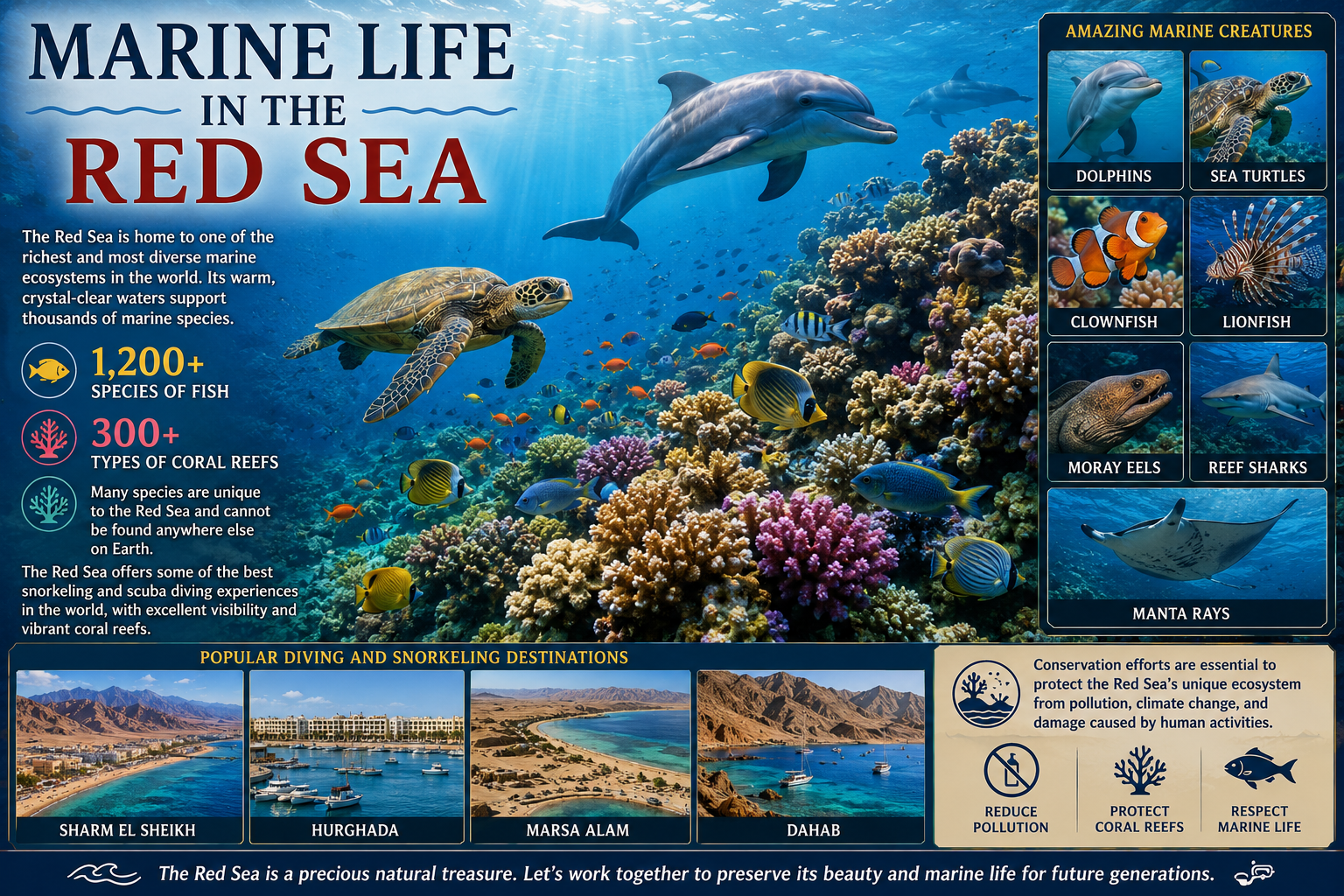
The Red Sea is home to one of the richest and most diverse marine ecosystems in the world. Its warm, crystal-clear waters provide the perfect environment for thousands of marine species, making it one of the best destinations for snorkeling and scuba diving.
Scientists estimate that the Red Sea contains more than 1,200 species of fish and over 300 types of coral reefs. Many of these marine species are unique to the region and cannot be found anywhere else on Earth.
Colorful coral reefs stretch along much of the coastline, creating underwater landscapes filled with tropical fish, sea turtles, dolphins, rays, and many other fascinating creatures. The excellent underwater visibility and calm waters attract divers and marine life enthusiasts from around the world.
Some of the most famous marine animals found in the Red Sea include:
- Dolphins
- Sea turtles
- Clownfish
- Lionfish
- Moray eels
- Reef sharks
- Manta rays
The coral reefs of the Red Sea are especially important because they are considered among the most resilient coral ecosystems in the world. Even in warm temperatures, many Red Sea corals continue to survive and thrive better than coral reefs in other regions.
Popular diving and snorkeling destinations such as Sharm El Sheikh, Hurghada, Marsa Alam, and Dahab offer visitors the chance to explore incredible underwater worlds filled with colorful marine life.
In recent years, environmental organizations and local authorities have worked to protect the Red Sea ecosystem from pollution, climate change, and damage caused by tourism activities. Conservation efforts are essential to preserve this unique marine environment for future generations.
Today, the Red Sea remains one of the world’s top marine tourism destinations, attracting millions of visitors every year who come to experience its natural beauty and underwater biodiversity.
Coral Reefs of the Red Sea
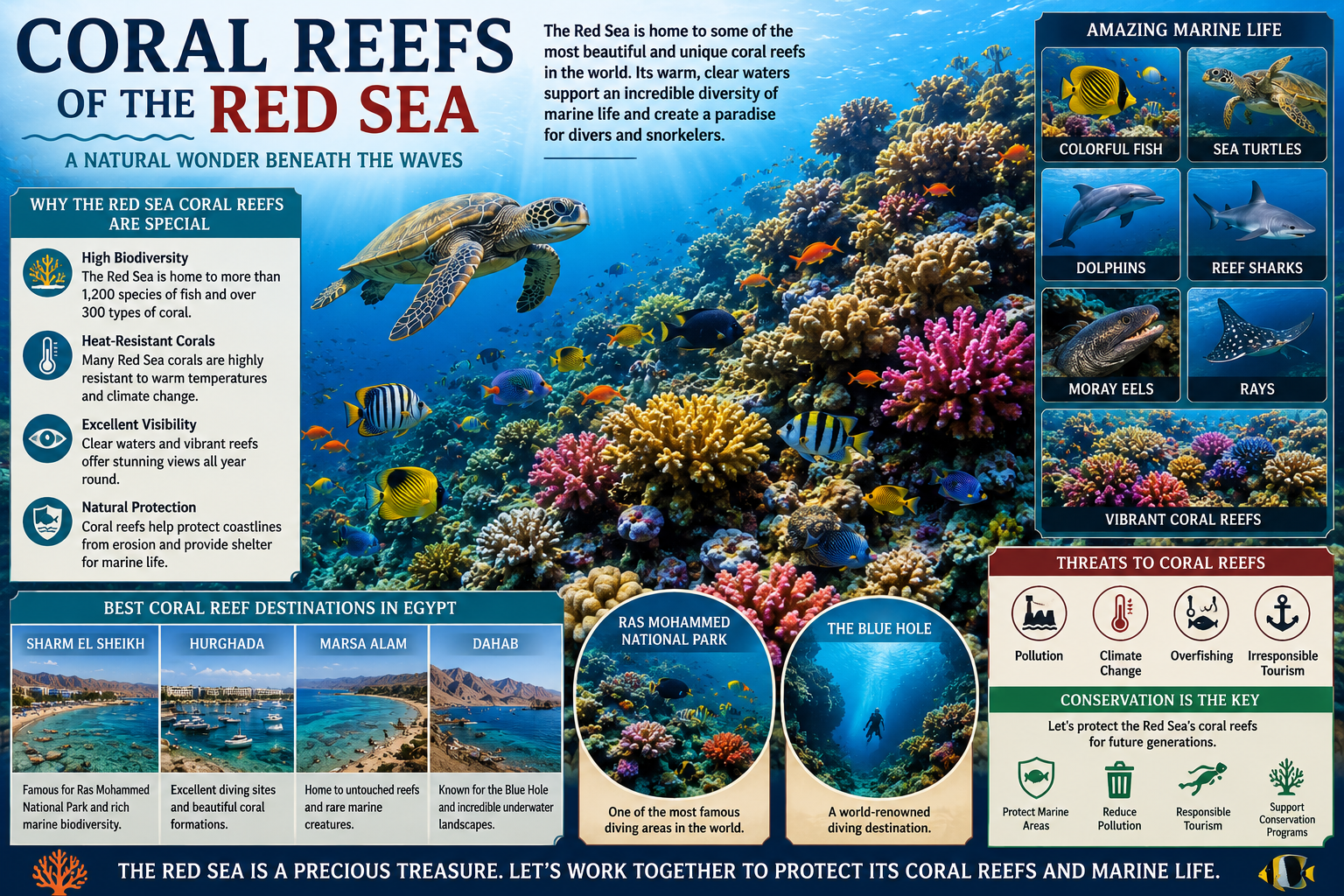
The coral reefs of the Red Sea are considered among the most beautiful and unique coral ecosystems in the world. Stretching along the coastlines of Egypt and neighboring countries, these reefs attract millions of divers, snorkelers, marine scientists, and nature lovers every year.
What makes the Red Sea coral reefs special is their incredible biodiversity and ability to survive in warm, salty waters. Scientists believe many Red Sea corals are more resistant to climate change and rising sea temperatures compared to coral reefs in other parts of the world.
The reefs are home to thousands of marine species, including:
- Colorful tropical fish
- Sea turtles
- Dolphins
- Reef sharks
- Moray eels
- Rays and many other sea creatures
These coral formations create underwater gardens filled with vibrant colors and unique marine habitats. The clear visibility of the Red Sea allows divers and snorkelers to enjoy breathtaking underwater views throughout the year.
Some of the best coral reef destinations in Egypt include:
Popular diving areas such as Ras Mohammed National Park and the Blue Hole are internationally famous for their spectacular coral reefs and marine biodiversity.
Coral reefs also play an important environmental role. They help protect coastlines from erosion, provide shelter for marine life, and support tourism industries across the Red Sea region.
However, these fragile ecosystems face several environmental threats, including pollution, climate change, overfishing, and damage caused by irresponsible tourism activities. Because of this, conservation programs and marine protected areas have become increasingly important in preserving the natural beauty of the Red Sea.
Today, the coral reefs of the Red Sea remain one of the world’s greatest natural treasures and continue to make Egypt one of the top diving destinations on Earth.
Famous Red Sea Destinations in Egypt
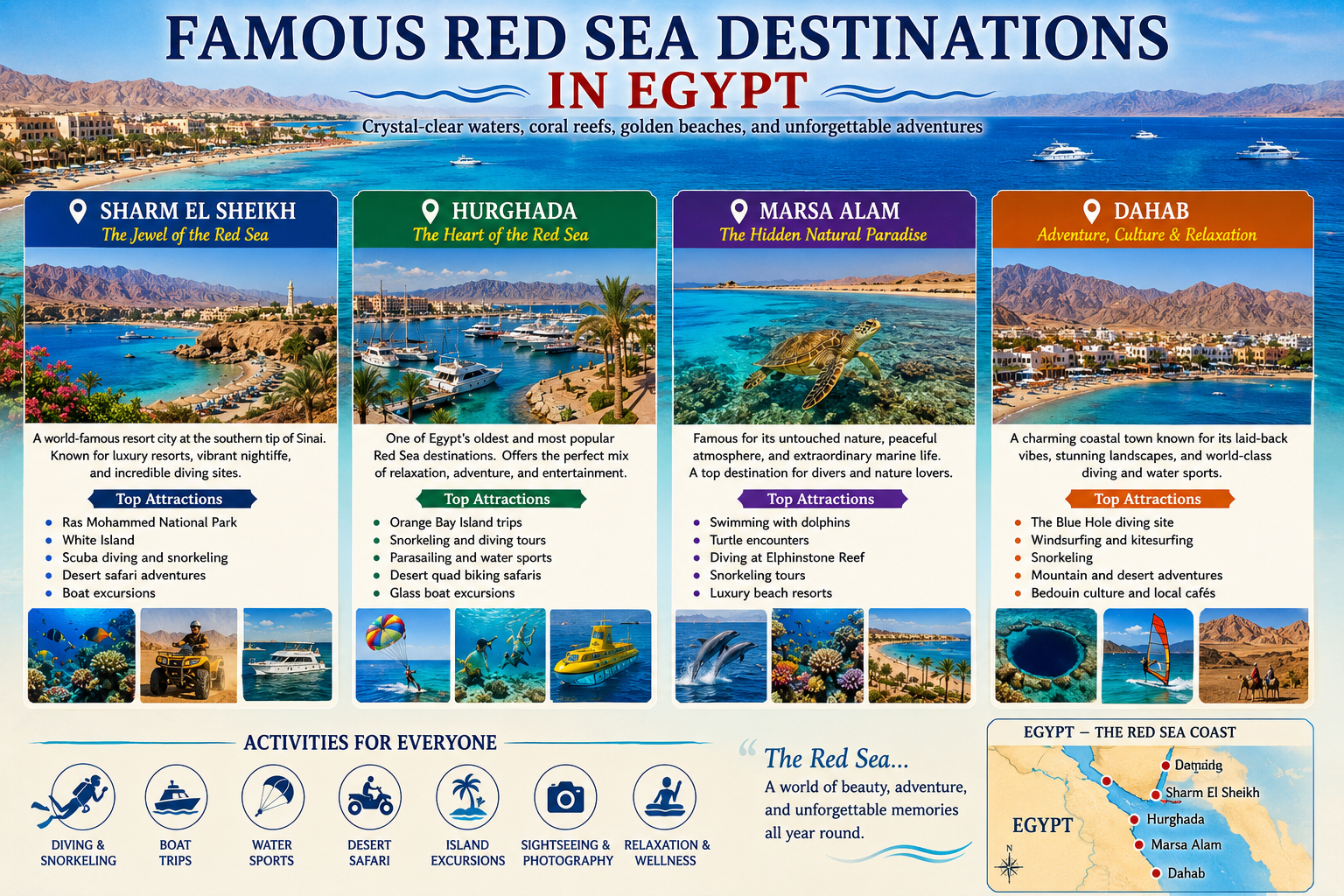
The Egyptian Red Sea coast is home to some of the most beautiful tourist destinations in the world. Known for crystal-clear waters, coral reefs, sandy beaches, and year-round sunshine, these cities attract millions of visitors every year for relaxation, adventure, and marine activities.
Each destination along the Red Sea offers its own unique atmosphere and experiences, making Egypt one of the top beach tourism destinations globally.
Sharm El Sheikh
Sharm El Sheikh is one of the most famous resort cities in Egypt and the Middle East. Located at the southern tip of the Sinai Peninsula, the city is internationally known for luxury resorts, vibrant nightlife, and world-class diving sites.
Popular attractions in Sharm El Sheikh include:
- Ras Mohammed National Park
- White Island
- Scuba diving and snorkeling
- Desert safari adventures
- Boat excursions
The city is especially famous for its colorful coral reefs and clear underwater visibility, making it a paradise for divers and marine life lovers.
Hurghada
Hurghada is one of Egypt’s oldest and most popular Red Sea destinations. Over the years, it transformed from a small fishing village into a major international tourism center filled with resorts, marinas, restaurants, and entertainment activities.
Visitors to Hurghada enjoy:
- Orange Bay Island trips
- Snorkeling and diving tours
- Parasailing and water sports
- Desert quad biking safaris
- Glass boat excursions
Its long coastline and beautiful beaches make it ideal for families, couples, and adventure travelers.
Marsa Alam
Marsa Alam is famous for its untouched nature, peaceful atmosphere, and extraordinary marine life. It has become one of the best diving destinations in the Red Sea thanks to its pristine coral reefs and rare sea creatures.
Popular experiences in Marsa Alam include:
- Swimming with dolphins
- Turtle encounters
- Diving at Elphinstone Reef
- Snorkeling tours
- Luxury beach resorts
The city is particularly attractive for travelers seeking relaxation and eco-tourism experiences away from crowded tourist areas.
Dahab
Dahab is known for its relaxed atmosphere, stunning desert landscapes, and incredible diving spots. Once a small Bedouin fishing village, Dahab became a favorite destination for backpackers, divers, and adventure travelers from around the world.
The city is famous for:
- The Blue Hole diving site
- Windsurfing and kitesurfing
- Snorkeling
- Mountain and desert adventures
- Bedouin culture and local cafés
Dahab offers a quieter and more laid-back experience compared to larger resort cities, making it ideal for travelers looking for both adventure and relaxation.
Together, these Red Sea destinations showcase the incredible diversity of Egypt’s coastline and continue to make the Red Sea one of the country’s most valuable tourism treasures.
Tourism Development in the Red Sea
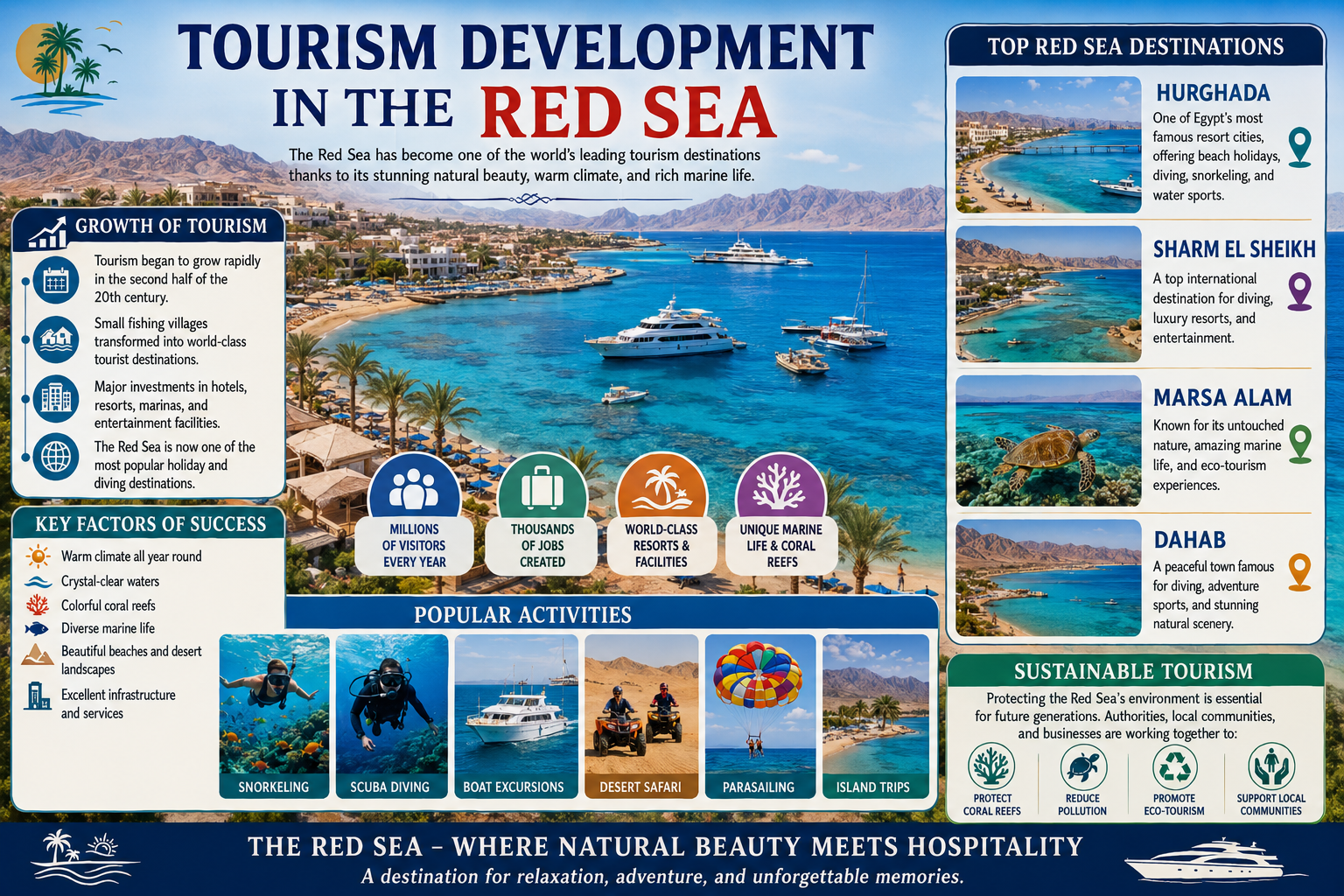
Tourism along the Red Sea coast began to grow rapidly during the second half of the 20th century. What were once small fishing villages and quiet coastal towns gradually transformed into some of the most famous tourist destinations in the Middle East.
The Egyptian government and private investors recognized the enormous tourism potential of the Red Sea because of its warm climate, crystal-clear waters, colorful coral reefs, and beautiful beaches. As a result, large tourism development projects began across the coastline.
Cities such as Hurghada and Sharm El Sheikh experienced major growth during the 1980s and 1990s. Luxury hotels, international resorts, marinas, restaurants, diving centers, and entertainment facilities were built to attract visitors from around the world.
At the same time, scuba diving tourism became one of the biggest attractions in the Red Sea region. Divers traveled to Egypt to explore famous underwater sites filled with coral reefs, shipwrecks, and rare marine life. This helped establish the Red Sea as one of the world’s leading diving destinations.
Modern tourism development also expanded into destinations such as Marsa Alam and Dahab, which became known for eco-tourism, relaxation, adventure sports, and untouched natural beauty.
Today, the Red Sea tourism industry offers a wide variety of activities, including:
- Snorkeling
- Scuba diving
- Boat excursions
- Desert safari tours
- Parasailing
- Island trips
- Luxury beach holidays
The region attracts millions of tourists every year from Europe, the Middle East, and many other parts of the world. Tourism has become one of the most important economic sectors along the Egyptian Red Sea coast, creating jobs and supporting local communities.
Despite this rapid growth, environmental protection has become increasingly important. Authorities and environmental organizations continue working to preserve coral reefs, marine life, and natural ecosystems while supporting sustainable tourism development.
Today, the Red Sea remains one of Egypt’s greatest tourism treasures and continues to be a symbol of relaxation, adventure, and natural beauty.
Best Things to Do in the Red Sea
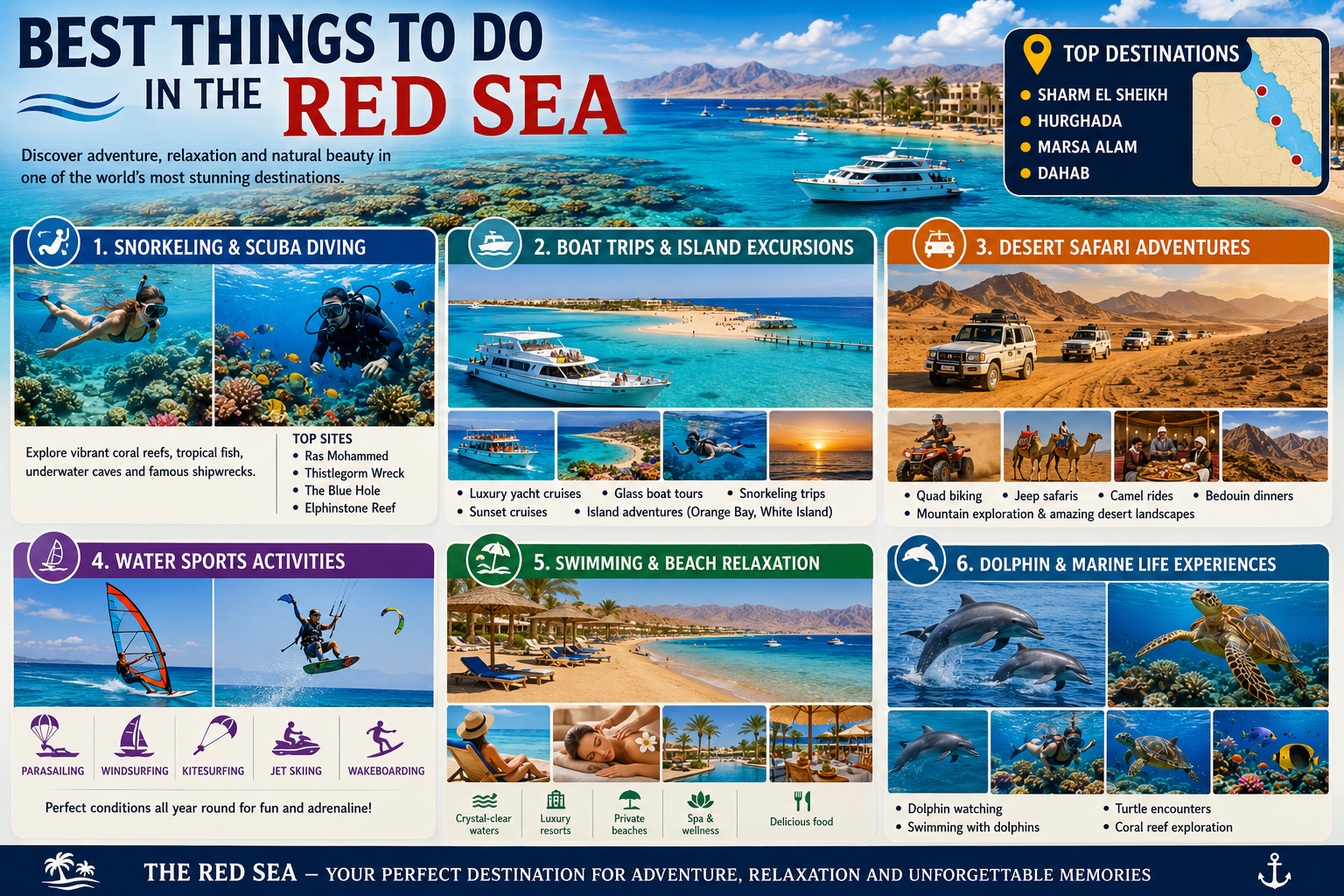
The Red Sea offers a wide variety of activities for travelers seeking adventure, relaxation, nature, and unforgettable experiences. Whether visitors are interested in marine life, water sports, desert adventures, or luxury beach holidays, the Red Sea has something for everyone.
Thanks to its warm weather, crystal-clear waters, and stunning natural landscapes, the region has become one of the world’s top tourism destinations for outdoor activities and sea adventures.
Snorkeling and Scuba Diving
The Red Sea is internationally famous for snorkeling and scuba diving. Divers from around the world visit Egypt to explore colorful coral reefs, tropical fish, underwater caves, and shipwrecks.
Top diving destinations include:
- Sharm El Sheikh
- Hurghada
- Marsa Alam
- Dahab
Popular diving sites such as Ras Mohammed and the Blue Hole are considered among the best in the world.
Boat Trips and Island Excursions
Boat tours are one of the most popular activities in the Red Sea. Visitors can enjoy:
- Luxury yacht cruises
- Glass boat tours
- Snorkeling boat trips
- Sunset cruises
- Island excursions
Famous islands such as Orange Bay and White Island attract tourists looking for crystal-clear lagoons and relaxing beach experiences.
Desert Safari Adventures
The deserts surrounding the Red Sea offer incredible adventure opportunities. Visitors can experience:
- Quad biking
- Jeep safaris
- Camel rides
- Bedouin dinners
- Mountain exploration
These desert excursions allow travelers to discover the natural beauty and culture of the Sinai and Eastern Desert regions.
Water Sports Activities
The Red Sea is perfect for water sports because of its calm waters and favorable weather conditions. Popular activities include:
- Parasailing
- Windsurfing
- Kitesurfing
- Jet skiing
- Wakeboarding
Destinations like Dahab are especially famous for windsurfing and kitesurfing.
Swimming and Beach Relaxation
Many travelers visit the Red Sea simply to relax and enjoy its beautiful beaches and luxury resorts. The warm climate allows visitors to swim and enjoy the sea almost all year round.
Beach resorts across the Red Sea coast provide:
- Private beaches
- Spa experiences
- Luxury hotels
- Beachfront restaurants
- Family-friendly entertainment
Dolphin and Marine Wildlife Experiences
In destinations such as Marsa Alam, tourists can enjoy unforgettable marine experiences, including:
- Dolphin watching
- Swimming with dolphins
- Turtle encounters
- Coral reef exploration
These experiences make the Red Sea one of the most unique marine tourism destinations in the world.
Today, the Red Sea continues to attract millions of travelers seeking adventure, relaxation, and unforgettable natural beauty along Egypt’s stunning coastline.
Best Time to Visit the Red Sea
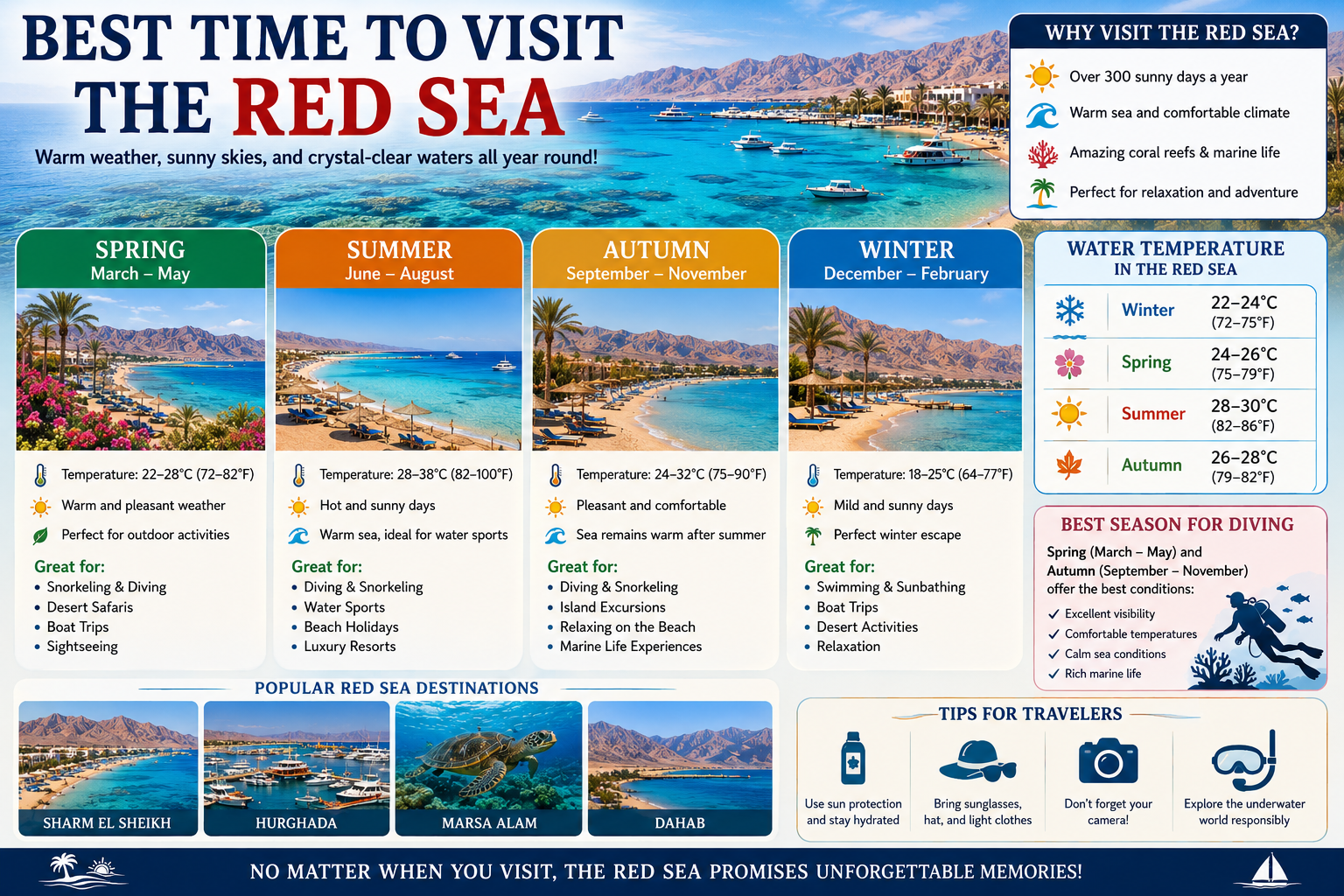
The Red Sea is considered one of the best year-round travel destinations in the world thanks to its warm climate, sunny weather, and comfortable sea temperatures. Visitors can enjoy beach holidays, diving, snorkeling, and outdoor activities during almost every season.
However, the best time to visit depends on the type of experience travelers are looking for.
Spring (March to May)
Spring is one of the most popular times to visit the Red Sea. Temperatures are warm but comfortable, making it perfect for:
- Snorkeling
- Scuba diving
- Desert safaris
- Boat trips
- Sightseeing
The weather during spring is ideal for outdoor activities without the extreme heat of summer.
Summer (June to August)
Summer is the hottest season along the Red Sea coast, with temperatures often exceeding 35°C (95°F). Despite the heat, many tourists still visit because of:
- Warm sea temperatures
- Luxury beach resorts
- Excellent diving conditions
- Water sports activities
The coastal breeze helps make the weather more comfortable near the sea, especially in resort areas such as Hurghada and Sharm El Sheikh.
Autumn (September to November)
Autumn is considered one of the best seasons to visit the Red Sea. The weather becomes slightly cooler while the sea remains warm after summer.
This season is excellent for:
- Diving and snorkeling
- Island excursions
- Relaxing beach holidays
- Marine wildlife experiences
Many travelers prefer autumn because tourist crowds are often smaller than during peak summer months.
Winter (December to February)
Winter along the Red Sea coast is mild and sunny compared to many European countries, making it a popular winter escape destination.
Average daytime temperatures remain comfortable for:
- Swimming
- Sunbathing
- Boat trips
- Desert activities
Destinations like Marsa Alam and Dahab remain attractive even during winter because of their pleasant climate.
Water Temperature in the Red Sea
One of the reasons the Red Sea is so popular is its warm water throughout the year:
- Winter: around 22–24°C (72–75°F)
- Summer: around 28–30°C (82–86°F)
These temperatures make swimming, snorkeling, and diving enjoyable in every season.
Best Season for Diving
Many divers consider spring and autumn the best times for scuba diving in the Red Sea because of:
- Excellent underwater visibility
- Comfortable temperatures
- Calm sea conditions
- Rich marine life activity
Famous diving destinations such as Ras Mohammed, the Blue Hole, and Elphinstone Reef attract diving enthusiasts from all over the world throughout the year.
Overall, the Red Sea offers perfect weather and unforgettable experiences in every season, making it one of Egypt’s top tourism destinations year-round.
Environmental Challenges Facing the Red Sea
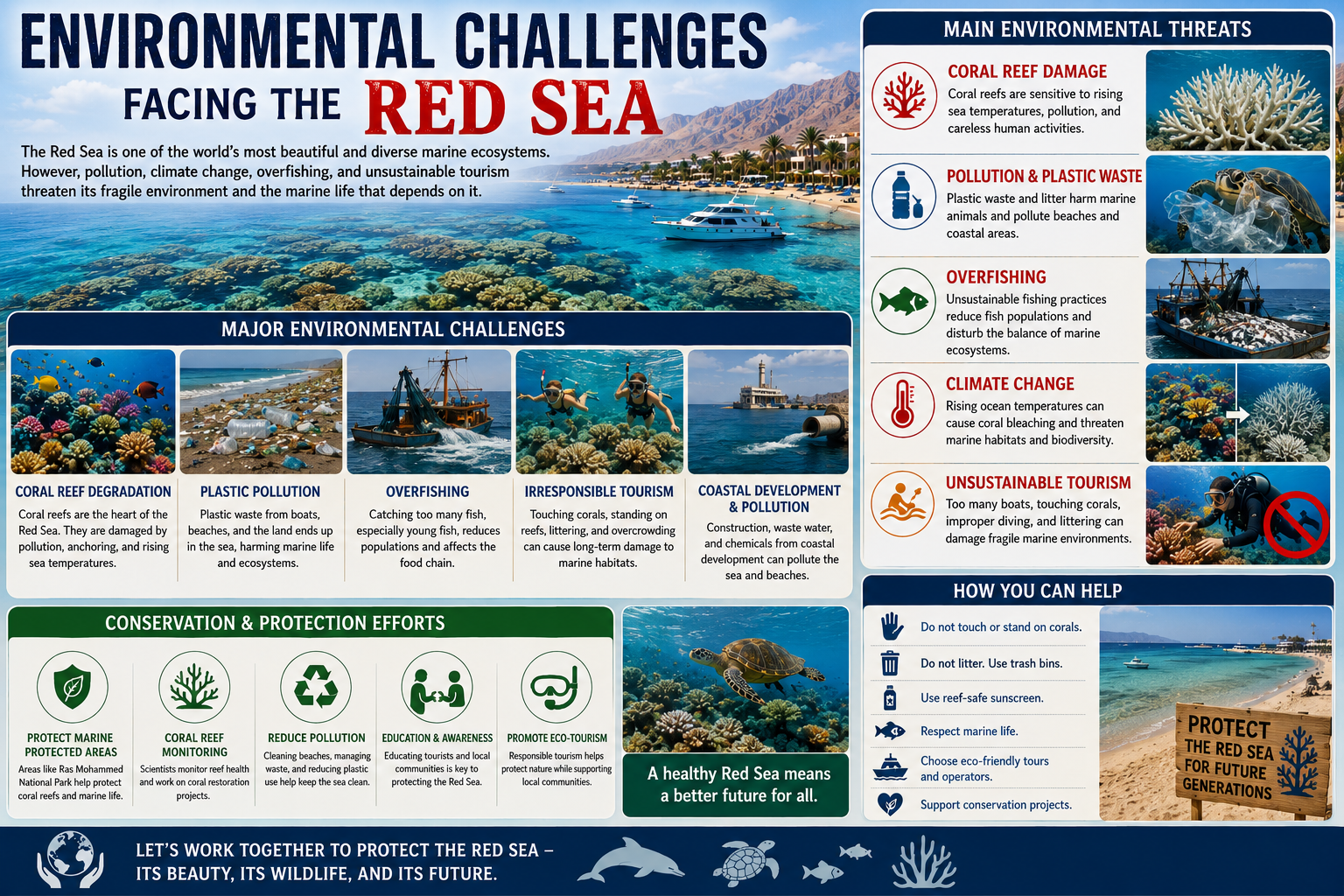
Despite its incredible beauty and rich marine biodiversity, the Red Sea faces several environmental challenges that threaten its fragile ecosystem. Over the years, growing tourism, pollution, climate change, and human activities have increased pressure on coral reefs and marine life across the region.
One of the biggest environmental concerns in the Red Sea is coral reef damage. Coral reefs are highly sensitive ecosystems, and they can be harmed by:
- Pollution
- Rising sea temperatures
- Overfishing
- Plastic waste
- Careless tourism activities
Although many Red Sea corals are considered more resistant to heat than reefs in other parts of the world, climate change still poses a major long-term threat. Increasing ocean temperatures and environmental stress can lead to coral bleaching, which damages reef ecosystems and marine habitats.
Tourism development along the Red Sea coast has also created environmental challenges. Large numbers of boats, resorts, and visitors can negatively impact marine ecosystems if tourism is not managed responsibly. Activities such as touching coral reefs, littering, or improper diving practices may damage fragile underwater environments.
Plastic pollution is another growing issue in the region. Waste entering the sea can harm fish, sea turtles, dolphins, and other marine animals. Protecting beaches and reducing pollution are essential for preserving the natural beauty of the Red Sea.
Overfishing also affects the balance of marine ecosystems. Some fish species have declined because of unsustainable fishing practices, which can disrupt coral reef health and biodiversity.
To address these challenges, Egypt and international environmental organizations have launched conservation programs focused on:
- Protecting coral reefs
- Creating marine protected areas
- Promoting eco-tourism
- Reducing pollution
- Educating tourists and local communities
Protected areas such as Ras Mohammed National Park play an important role in preserving marine life and supporting sustainable tourism.
Today, environmental protection has become a key priority for the future of the Red Sea. Responsible tourism, conservation efforts, and environmental awareness are essential to ensure that future generations can continue enjoying one of the world’s most extraordinary marine ecosystems.
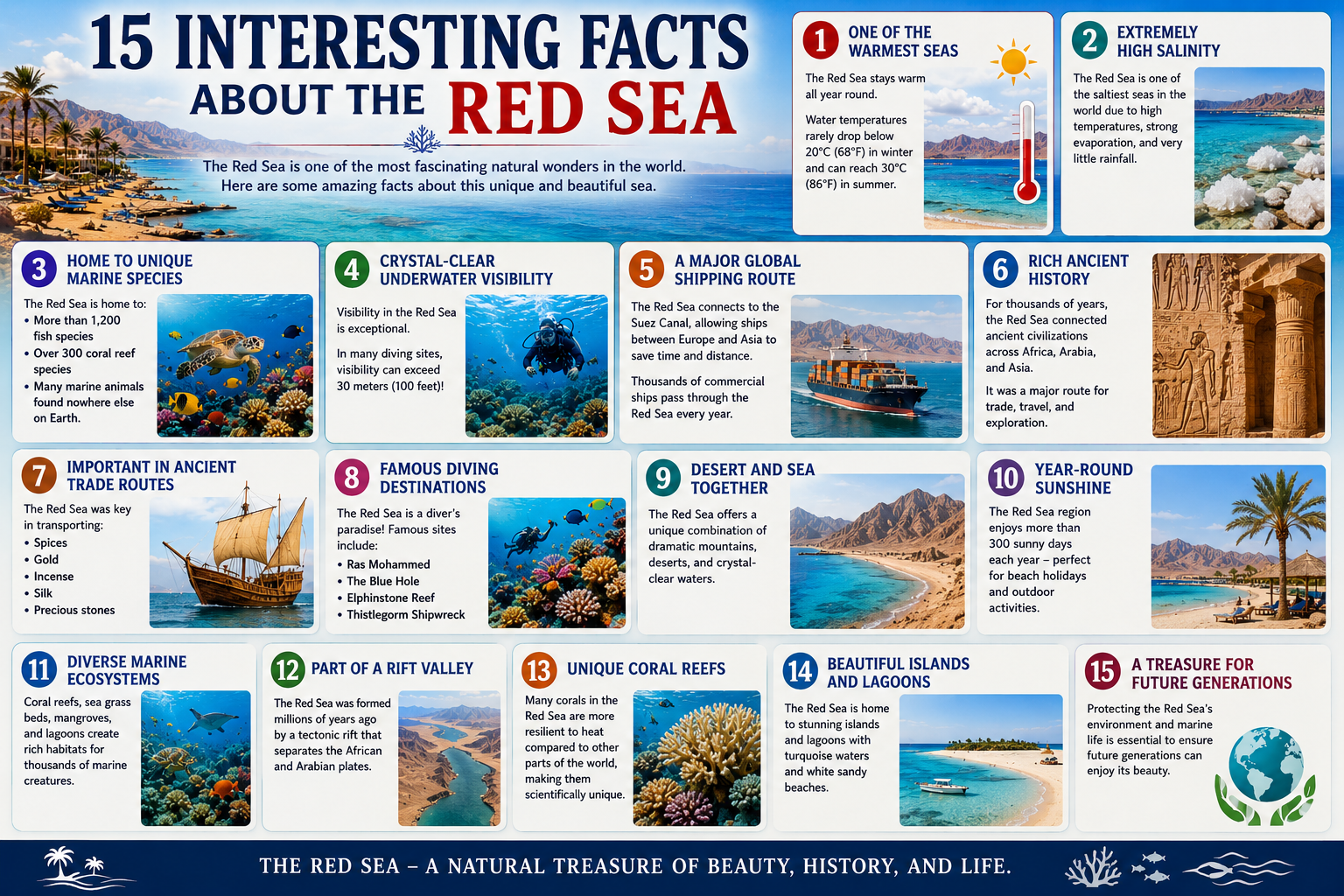
Interesting Facts About the Red Sea
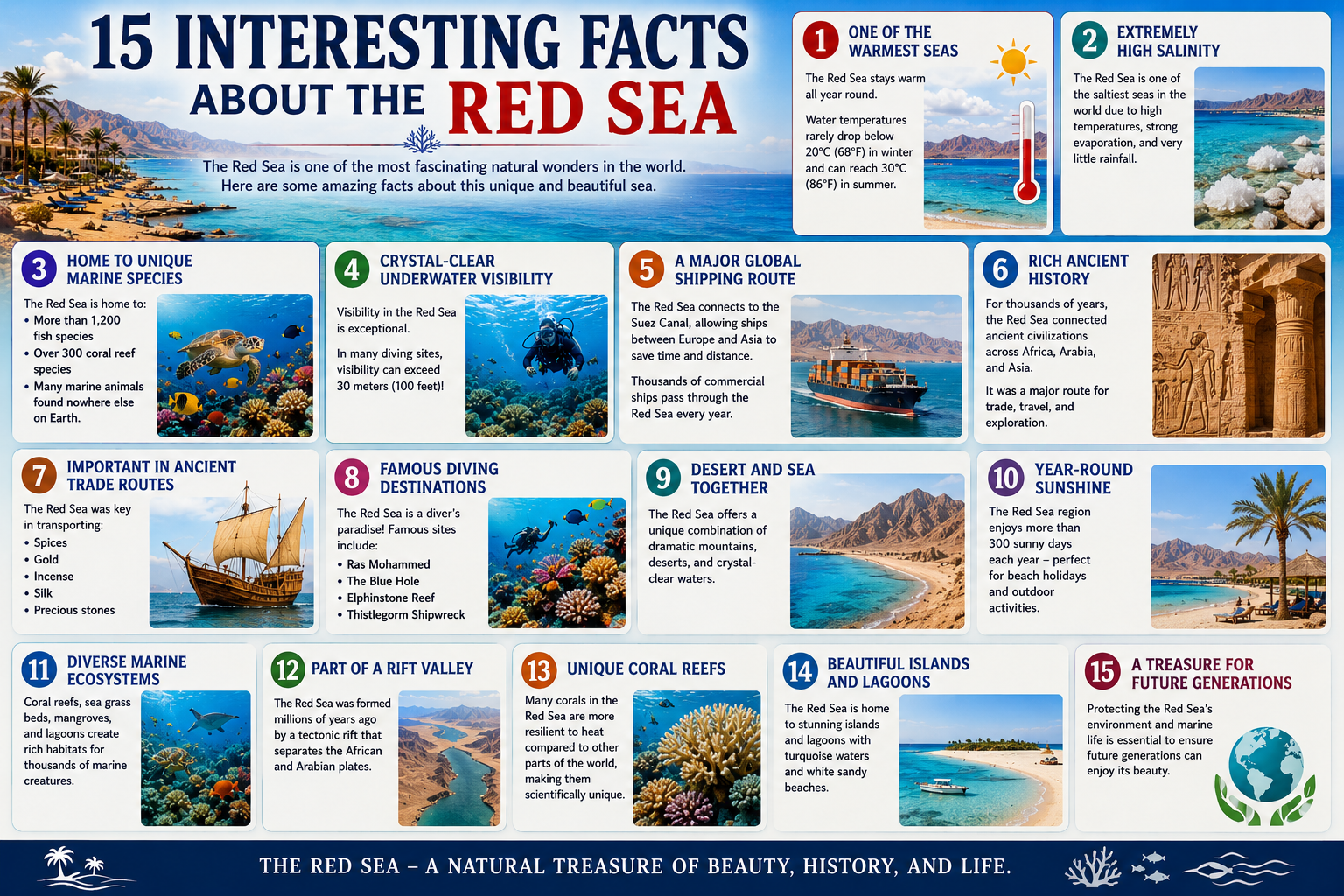
The Red Sea is one of the most fascinating natural wonders in the world. Beyond its beautiful beaches and coral reefs, the sea is filled with unique geographical, historical, and marine facts that make it truly extraordinary.
One of the Warmest Seas in the World
The Red Sea remains warm throughout the entire year, with water temperatures rarely becoming too cold for swimming or diving. This warm climate is one of the main reasons why the region attracts tourists during every season.
Extremely High Salinity
The Red Sea is considered one of the saltiest seas in the world. High temperatures, strong evaporation, and very little rainfall contribute to its high salt concentration.
Despite these conditions, thousands of marine species continue to thrive in its waters.
Home to Unique Marine Species
Scientists estimate that the Red Sea contains:
- More than 1,200 fish species
- Over 300 coral reef species
- Many marine animals found nowhere else on Earth
Its biodiversity makes it one of the world’s top diving and snorkeling destinations.
Crystal-Clear Underwater Visibility
The Red Sea is famous for its exceptional underwater visibility. In many diving locations, visibility can exceed 30 meters (100 feet), allowing divers to fully enjoy the colorful coral reefs and marine life.
A Major Global Shipping Route
The Red Sea is one of the world’s most strategically important waterways because it connects to the Suez Canal. This route allows ships traveling between Europe and Asia to save enormous amounts of time and distance.
Thousands of commercial ships pass through the Red Sea every year.
Rich Ancient History
For thousands of years, the Red Sea connected ancient civilizations across Africa, Arabia, and Asia. Egyptians, Greeks, Romans, and Islamic civilizations all used the sea for trade, travel, and exploration.
It played a major role in transporting:
- Spices
- Gold
- Incense
- Silk
- Precious stones
Famous Diving Destinations
Some of the world’s most famous diving sites are located in the Red Sea, including:
- Ras Mohammed
- The Blue Hole
- Elphinstone Reef
- Thistlegorm Shipwreck
Divers from around the globe visit destinations such as Sharm El Sheikh, Hurghada, Marsa Alam, and Dahab to explore these incredible underwater locations.
Desert and Sea Together
One of the most unique features of the Red Sea is the dramatic combination of mountains, desert landscapes, and crystal-clear waters. Few places in the world offer this extraordinary contrast between sea and desert scenery.
Year-Round Sunshine
The Red Sea region enjoys more than 300 sunny days each year, making it one of the best destinations for beach holidays and outdoor activities.
Today, the Red Sea continues to amaze visitors with its natural beauty, marine biodiversity, ancient history, and unforgettable tourism experiences.
Conclusion
The Red Sea is far more than just a beautiful body of water. It is a region rich in history, culture, marine life, and natural beauty that has connected civilizations for thousands of years. From ancient Egyptian trade expeditions and Greek and Roman commerce to Islamic pilgrimage routes and modern global shipping, the Red Sea has always played an important role in world history.
Today, the Red Sea is one of Egypt’s greatest tourism treasures. Its crystal-clear waters, colorful coral reefs, stunning beaches, and year-round sunshine attract millions of visitors from around the world. Famous destinations such as Sharm El Sheikh, Hurghada, Marsa Alam, and Dahab continue to offer unforgettable experiences for travelers seeking adventure, relaxation, diving, snorkeling, and marine exploration.
The Red Sea is also home to one of the world’s most unique marine ecosystems. Its coral reefs and underwater biodiversity make it one of the best diving destinations on Earth and an important area for environmental conservation.
As tourism and development continue to grow, protecting the Red Sea’s natural environment has become more important than ever. Responsible tourism, environmental awareness, and conservation efforts are essential to preserve this incredible marine paradise for future generations.
Whether visitors come for its ancient history, breathtaking coral reefs, luxury resorts, desert adventures, or unforgettable underwater experiences, the Red Sea remains one of the most extraordinary destinations in the world and a true natural treasure of Egypt.

Sun Tours Egypt
FAQs About the Red Sea